Why Does My Knee Hurt? 4 Common Factors That Could Be Contributing to Your Knee Pain
Knee pain can quickly start getting in the way of the things you enjoy.
Maybe you've had to modify your workouts, decrease your running mileage, spend less time on the golf course, or think twice before heading out to play pickleball.
When your knee starts hurting, it's easy to focus only on the painful area. But while the knee itself is important to assess, there are often other factors we need to consider to understand why the problem developed in the first place.
Here are four things I commonly look at when evaluating someone with knee pain.
1. Changes in Activity
One of the first questions I ask is: What changed?
Did you recently increase your running mileage? Start lifting heavier? Add another workout during the week? Play more rounds of golf? Return to a sport after taking some time off?
Sometimes the problem isn't the activity itself—it's that the amount of stress being placed on the body increased faster than it was prepared to handle.
Your body needs time to adapt to increased demands. When those demands exceed your current capacity, pain can develop.
This doesn't necessarily mean you need to completely stop the activities you enjoy. We may simply need to temporarily modify them while gradually building your body's capacity back up.
2. Strength
Strength plays an important role in how your body handles the forces placed on it during exercise, sports, and everyday activities.
When evaluating knee pain, I want to know whether the muscles surrounding the knee are strong enough for what you're asking your body to do.
But I don't stop there.
I also look at areas such as the hips and ankles, because the muscles above and below the knee play an important role in controlling the entire leg during movements like squatting, running, jumping, and changing direction.
Rather than simply guessing whether someone is "weak," objective strength testing can help identify specific deficits or differences between sides and give us something measurable to improve.
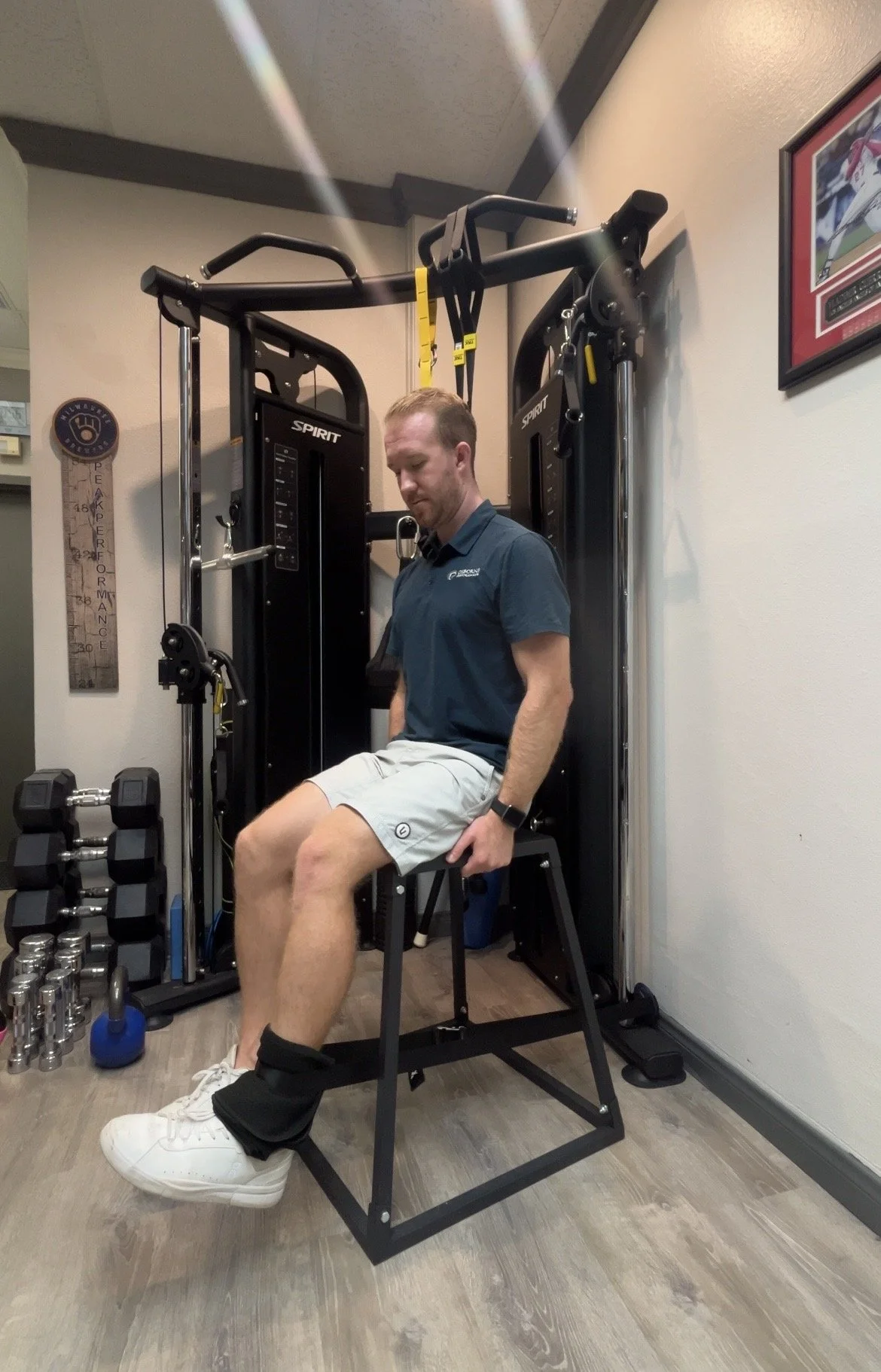
Strength test for the quads using a fixated hand held dynamometer.
3. Mobility
The knee doesn't work independently from the rest of the body.
For example, limitations in ankle or hip mobility can influence the strategies your body uses during squatting, running, stepping, and other activities.
That doesn't automatically mean a mobility limitation is causing your knee pain. However, it's another piece of the puzzle worth assessing.
The goal is to determine whether you have the mobility necessary to perform the activities that matter to you.
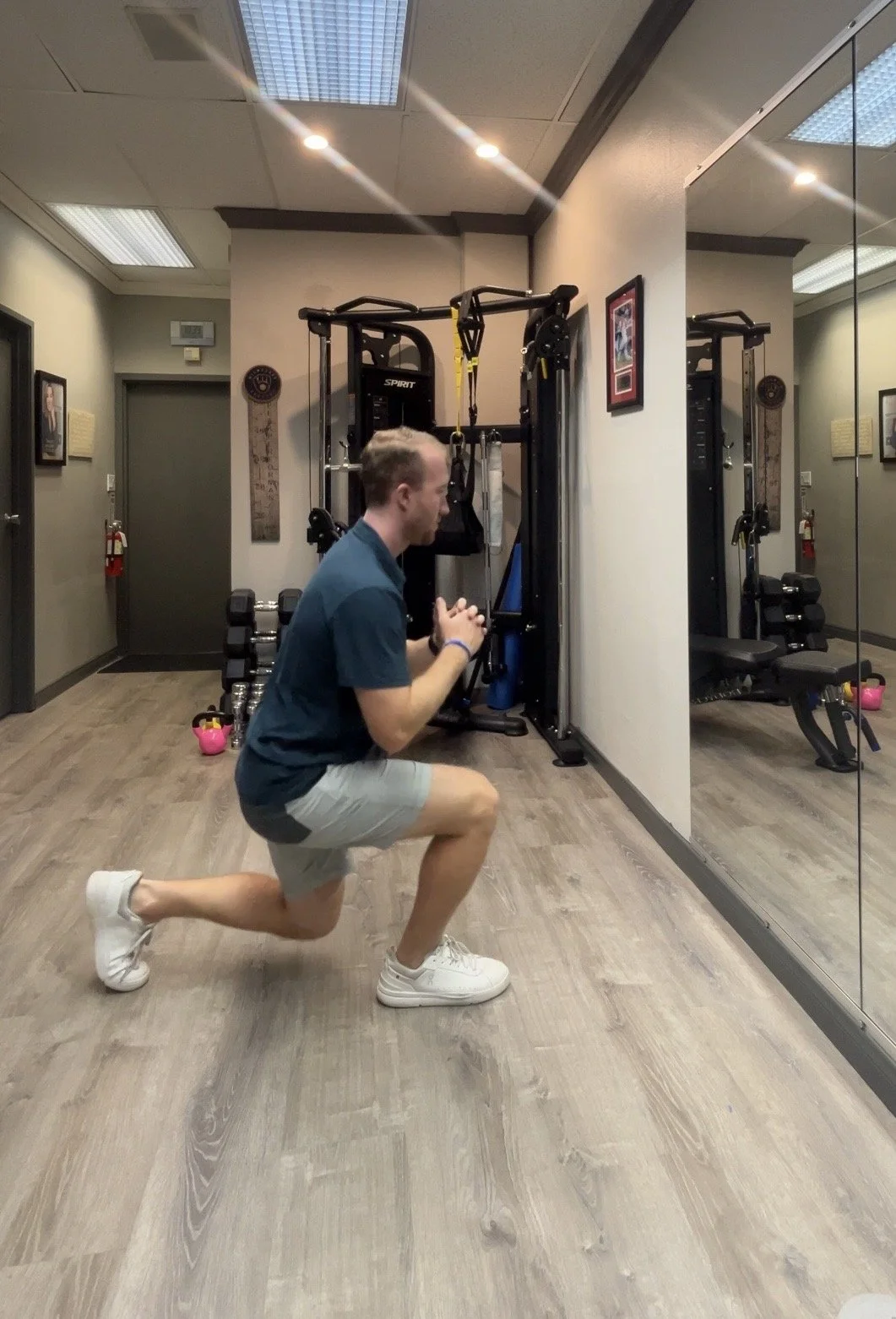
Mobility is assessed with functional movements & with passive range of motion assessments.
4. How You Move
Two people can have pain in the exact same area of the knee and need completely different plans.
That's why I want to see how someone moves during the activities that actually cause their symptoms.
This might include a squat, single-leg squat, step-down, running, jumping, or a movement specific to their sport.
I'm not looking for one "perfect" way to move.
Instead, I'm looking at how your body manages the demands of the movement and whether strength, mobility, control, or another factor may be limiting you.
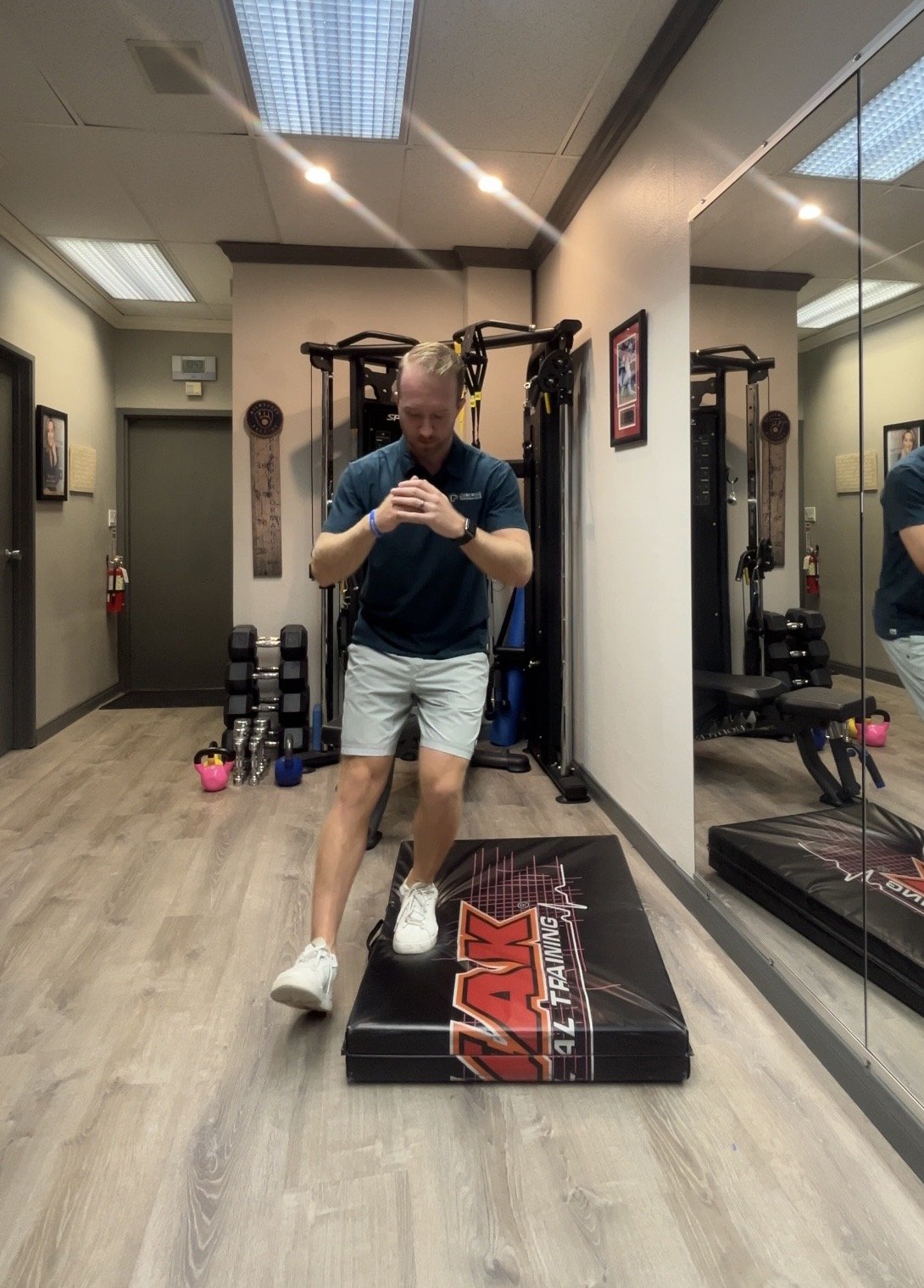
The step down exercise is a great movement to assess knee control and single leg stability.
Don't Just Focus on Where It Hurts
Knee pain is rarely as simple as finding one "bad" muscle or one exercise that fixes everything.
A thorough assessment should consider the painful area while also looking at your strength, mobility, movement, activity level, and the specific demands of the activities you want to get back to.
Once we understand what's contributing to the problem, we can build a plan around improving those limitations and gradually preparing your body for the things you want to do.
At Osborne Performance, the goal isn't just to help you feel better temporarily. It's to help you get out of pain, move better, and build the capacity to confidently return to the activities you enjoy.
If knee pain is getting in the way of your workouts, running, golf, pickleball, or everyday life, let's figure out what's holding you back.
Schedule a Discovery Call with Osborne Performance to get started.