5 Physical Limitations That Could Be Costing You Distance and Consistency in Your Golf Swing

Introduction
Many golfers spend hours working on swing mechanics, but overlook one important factor—their body.
If your hips, shoulders, or core don't have the mobility, stability, or strength to achieve certain positions, your body will compensate. These compensations can make it harder to improve your swing, decrease consistency, reduce distance, and even contribute to pain.
Here are five of the most common physical limitations I see during golf movement assessments.
Limitation #1:
Limited Hip Internal Rotation
During the golf swing, both hips need adequate internal and external rotation to allow you to maintain posture, rotate efficiently, and transfer force from the ground through the club. When hip mobility is limited, your body often compensates by placing more stress on other areas, such as the lower back.
Research has shown an association between limited lead hip internal rotation and low back pain in golfers. But hip mobility isn't just important for staying healthy—it also plays a key role in producing a consistent, powerful golf swing. Improving hip mobility can help you rotate more efficiently, maintain balance throughout the swing, and make it easier to achieve the positions your coach is trying to teach.
Why it matters
Limits your ability to rotate efficiently.
Makes weight transfer more difficult.
Often causes golfers to early extend or lose posture.
Signs
Tight hips
Loss of balance
Trouble finishing your swing
Low back soreness/pain after playing
Quick screen
Lower Quarter Rotation Test
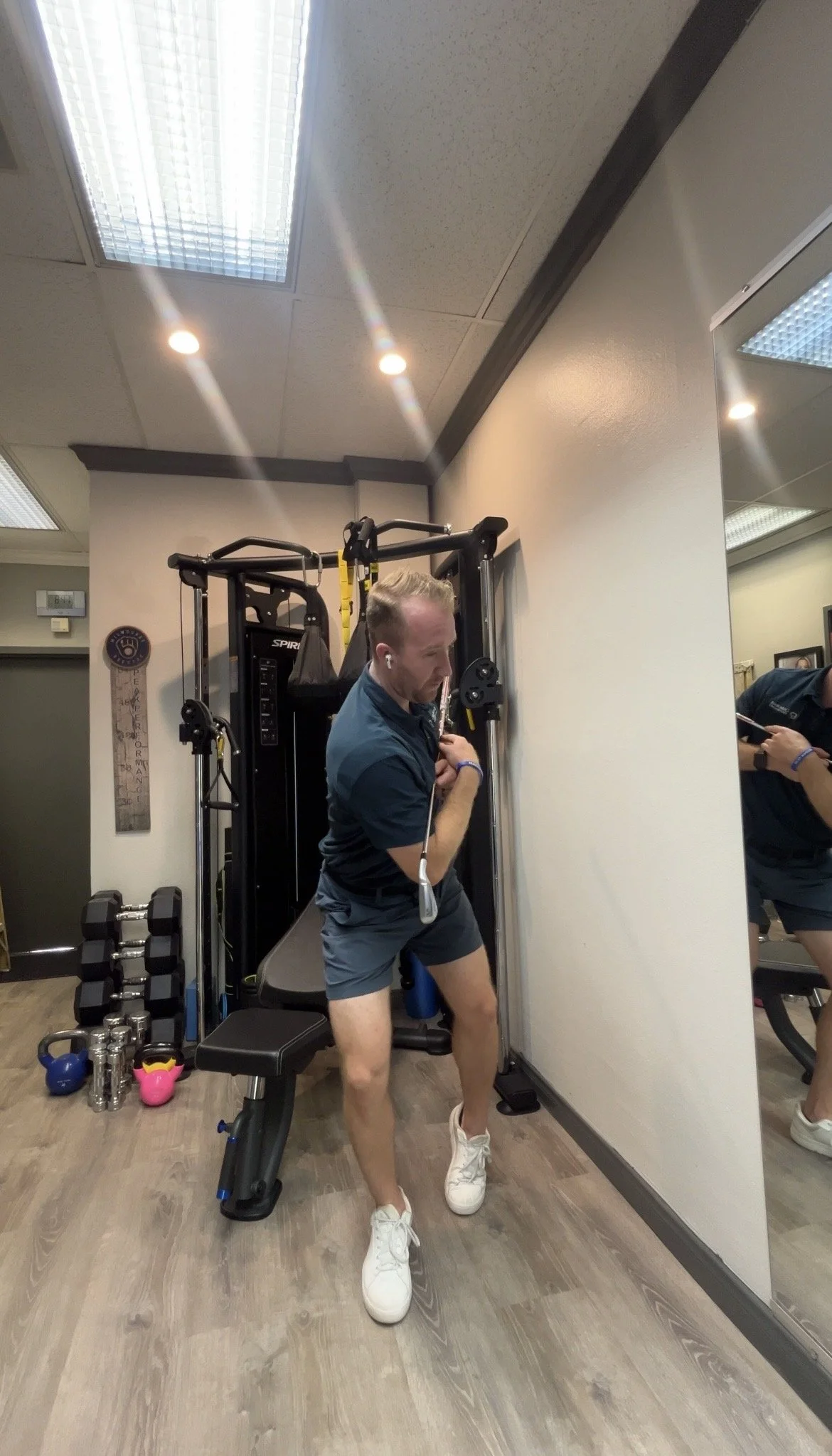
Lower Quarter Rotation Test
This screen assesses your ability to rotate over both your lead and trail hip while maintaining balance and stability. It also serves as an excellent exercise and warm-up to improve hip mobility before playing golf.
To perform the test, place one foot slightly in front of the other and shift most of your weight onto your front leg. Keeping your balance, slowly rotate your pelvis and trunk around your front hip in both directions. Repeat the test on the opposite side.
During the movement, you should be able to rotate smoothly while maintaining your balance and control. Difficulty rotating, losing your balance, or noticing a significant difference between sides may indicate limitations in hip mobility or stability that could affect your golf swing.
Limitation #2:
Poor Thoracic Spine Rotation
The thoracic spine, or upper back, plays a critical role in an efficient golf swing. Ideally, golfers should have approximately 45 degrees of thoracic rotation in both directions to allow for a full shoulder turn during the backswing.
When upper back mobility is limited, the body often compensates by rotating through the lower back instead. Over time, this can increase stress on the lumbar spine and may contribute to low back pain. Limited thoracic rotation can also make it more difficult to complete a full backswing, reducing your ability to generate clubhead speed and produce a consistent golf swing.
Improving thoracic spine mobility allows you to rotate more efficiently, decrease unnecessary stress on your lower back, and create a more powerful, repeatable swing.
Why it matters
Reduced backswing rotation
Increased stress on the lower back
Loss of clubhead speed
Signs
Limited turn in the golf swing
Tightness in the upper back
Shoulder discomfort or pain
Low back soreness
Screen
Seated Thoracic Spine Rotation Test
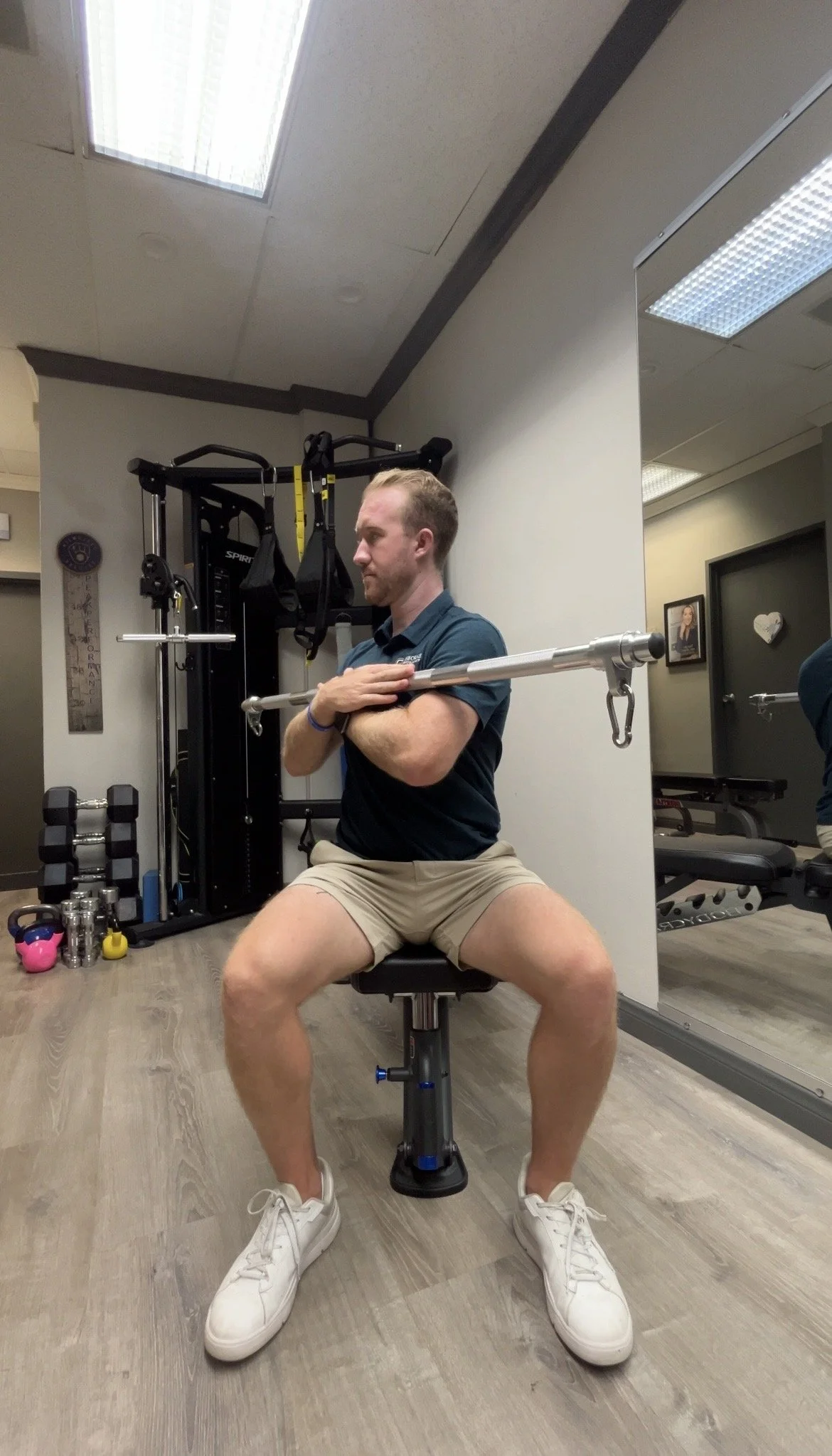
Seated Thoracic Spine Rotation Screen
This screen assesses your ability to rotate through your thoracic spine (upper back), which plays a key role in creating a full shoulder turn during the golf swing. Ideally, golfers should be able to rotate approximately 45 degrees to both the left and right.
To perform the test, keep both feet flat on the ground and rotate your upper body as far as you comfortably can in each direction. The goal is to rotate through your upper back while minimizing movement from your hips and lower back.
If you're unable to reach approximately 45 degrees or notice a significant difference between sides, limited thoracic mobility may be affecting your ability to rotate efficiently during the golf swing.
Limitation #3:
Limited Shoulder Mobility & Scapular Control
The ability of the trail shoulder to externally rotate is another physical quality that can influence consistency in the golf swing. Adequate shoulder mobility is important, but mobility alone isn't enough. You also need good scapular (shoulder blade) stability to properly control the shoulder throughout the swing.
If the shoulder lacks mobility or the scapular muscles are unable to provide a stable base, it can become difficult to achieve the positions your coach is trying to teach during the downswing. This may lead to compensations that affect both consistency and performance.
Improving shoulder mobility and scapular stability can make it easier to access an efficient downswing position while also reducing unnecessary stress on the shoulder.
Why It Matters
Improves your ability to get into an efficient downswing position
Promotes a more consistent club path and ball striking
Allows your shoulders and upper body to rotate more efficiently
Provides a stable foundation for force transfer throughout the swing
Helps reduce compensations that can contribute to pain or injury
Signs
Difficulty getting your trail arm into position during the downswing
Feeling tight or restricted in the trail shoulder during the swing
Shoulder discomfort or fatigue during or after a round
Screen
Standing Shoulder External Rotation vs Golf Posture External Rotation of the Trail Shoulder
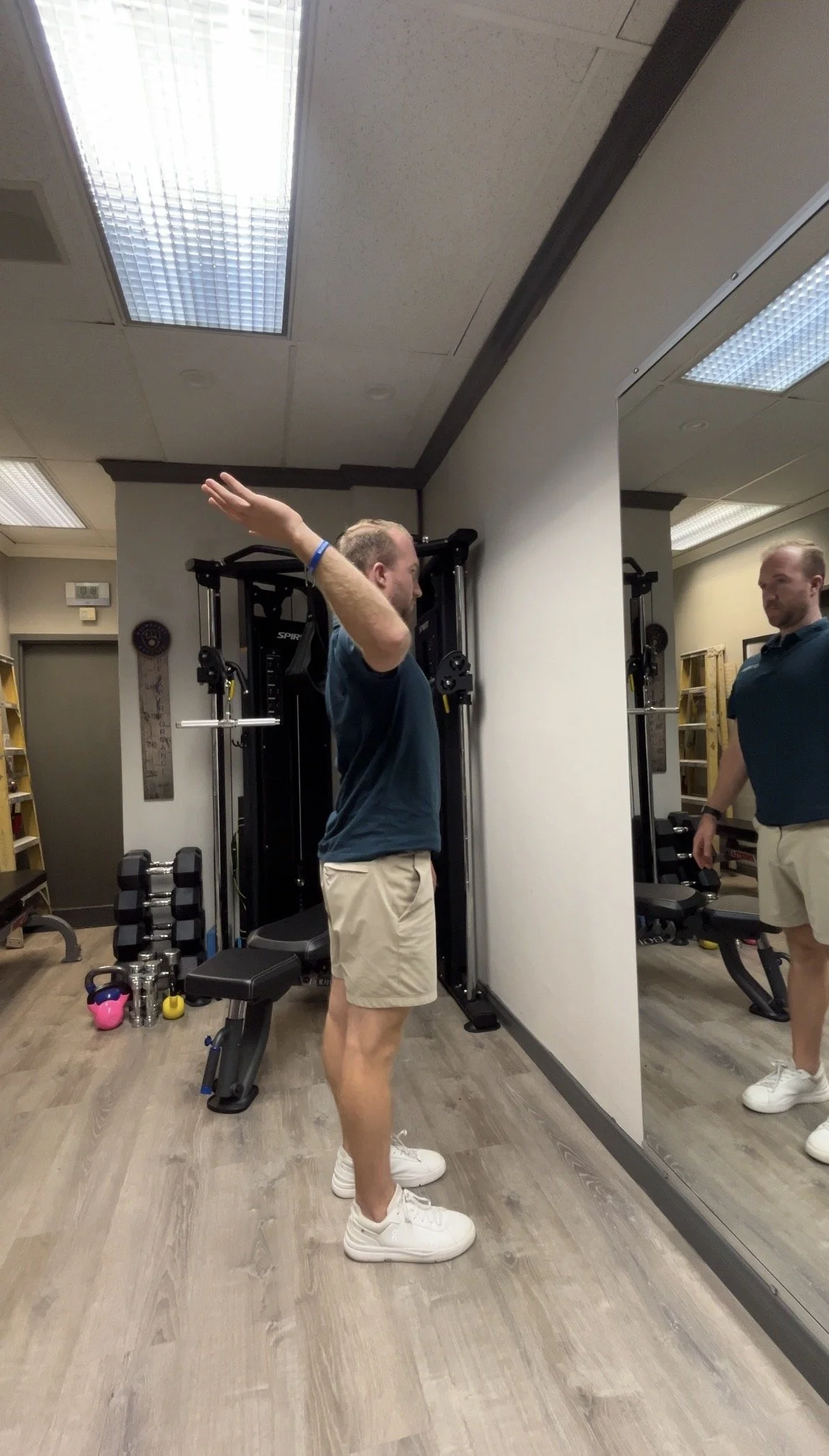
Standing Trail Shoulder External Rotation in 90/90 Position Screen
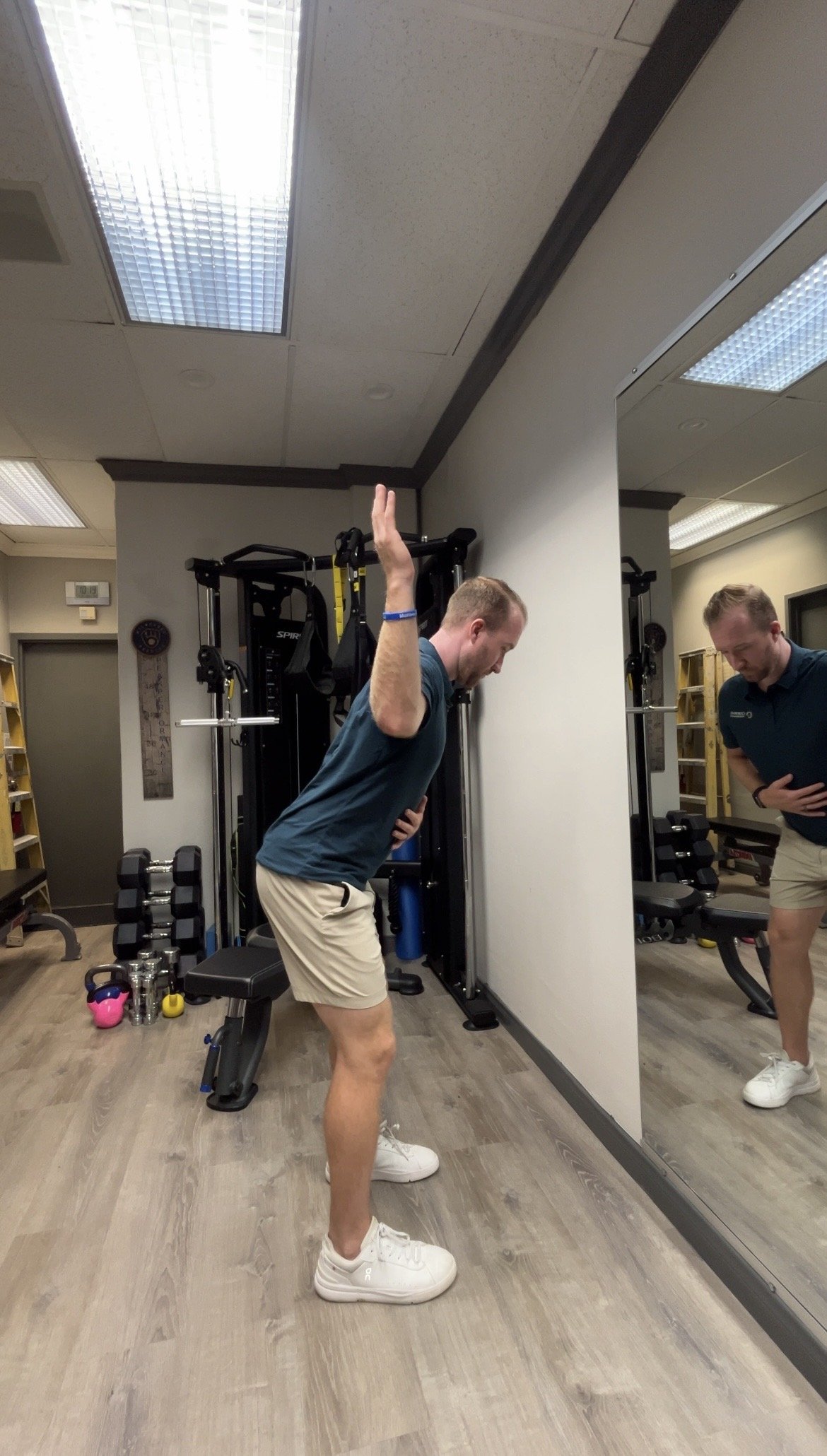
Golf Posture Trail Shoulder External Rotation in 90/90 Position Screen
This screen assesses your ability to externally rotate your trail shoulder in both a standing position and your golf posture. First, test your shoulder external rotation while standing upright. Then, repeat the same movement while holding your golf posture.
If your external rotation is significantly reduced in your golf posture compared to standing, it may indicate a lack of scapular (shoulder blade) stability rather than a true shoulder mobility restriction. This distinction is important because improving shoulder mobility alone may not solve the problem if the shoulder blade cannot provide a stable base for movement.
Limitation #4:
Hip Weakness
Hip weakness is one of the most common physical limitations I see in golfers. Strong hips are essential for loading into your trail leg during the backswing, generating power through impact, and maintaining balance during the follow-through.
When the hips are unable to produce or control force effectively, the body often compensates by placing more stress on other areas, such as the lower back, knees, and ankles. Improving hip strength not only helps create a more powerful and efficient golf swing but can also reduce injury risk and improve consistency from shot to shot.
Why It Matters
Improves your ability to load into the trail leg during the backswing.
Increases force production and power throughout the golf swing.
Enhances balance and stability from backswing to follow-through.
Creates a more efficient transfer of energy from the ground through the club.
Reduces compensations that can increase stress on the lower back, knees, and ankles.
Improves consistency by providing a stable foundation for every swing.
Signs
You struggle to maintain your balance during the golf swing.
You have difficulty loading into your trail leg during the backswing.
Your lower back becomes sore or fatigued after playing or practicing.
You feel like you generate most of your power with your upper body rather than your legs.
Screen
Single Leg Squat or Single Leg Bridge
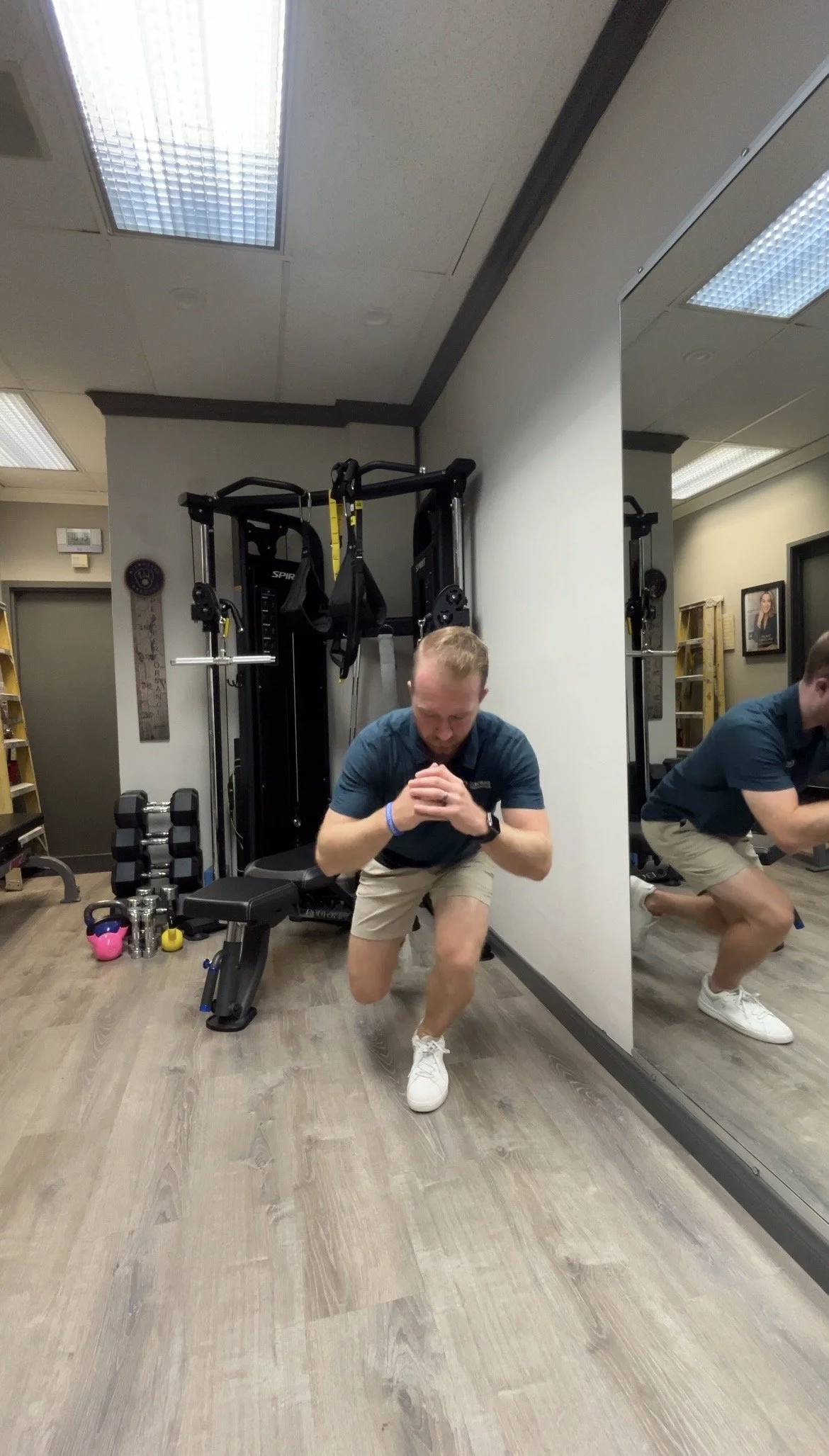
Single Leg Squat Screen
Single-Leg Squat Screen
The single-leg squat screen assesses a golfer's ability to stabilize on one leg while controlling the pelvis and lower extremity during a loaded movement. It provides valuable information about hip strength, balance, and overall movement quality.
Common compensations include the knee collapsing inward, losing balance, excessive trunk lean, or the pelvis dropping or rotating. These movement patterns may indicate deficits in hip strength or lower extremity control that can affect both performance and injury risk.
Alternative: Single-Leg Bridge
If a single-leg squat cannot be performed due to pain, balance limitations, or difficulty with the movement, a single-leg bridge can be used to assess hip strength. During this test, you should be able to lift your hips until your body forms a straight line from your shoulders to your knee while maintaining a level pelvis.
Difficulty lifting the hips, pelvic instability, hamstring cramping, or low back discomfort may suggest weakness in the gluteal muscles or poor lumbopelvic control.
Limitation #5:
Poor Balance
Balance is an essential component of an efficient golf swing. Throughout the swing, your body must control weight shifts, stabilize on each leg, and maintain posture while generating rotational force. Poor balance can make it difficult to consistently return the club to impact, often leading to compensations that reduce both performance and increase injury risk.
Why It Matters
Improves stability throughout the golf swing.
Allows for more consistent weight transfer between the trail and lead leg.
Helps maintain posture from address to follow-through.
Improves consistency and ball striking.
Reduces unnecessary compensations throughout the body.
Signs
You frequently lose your balance during your swing or finish.
You struggle to hold your finish position for 3–5 seconds.
You sway excessively during the backswing or downswing.
You feel unstable when swinging on uneven lies.
Screen
Single Leg Balance
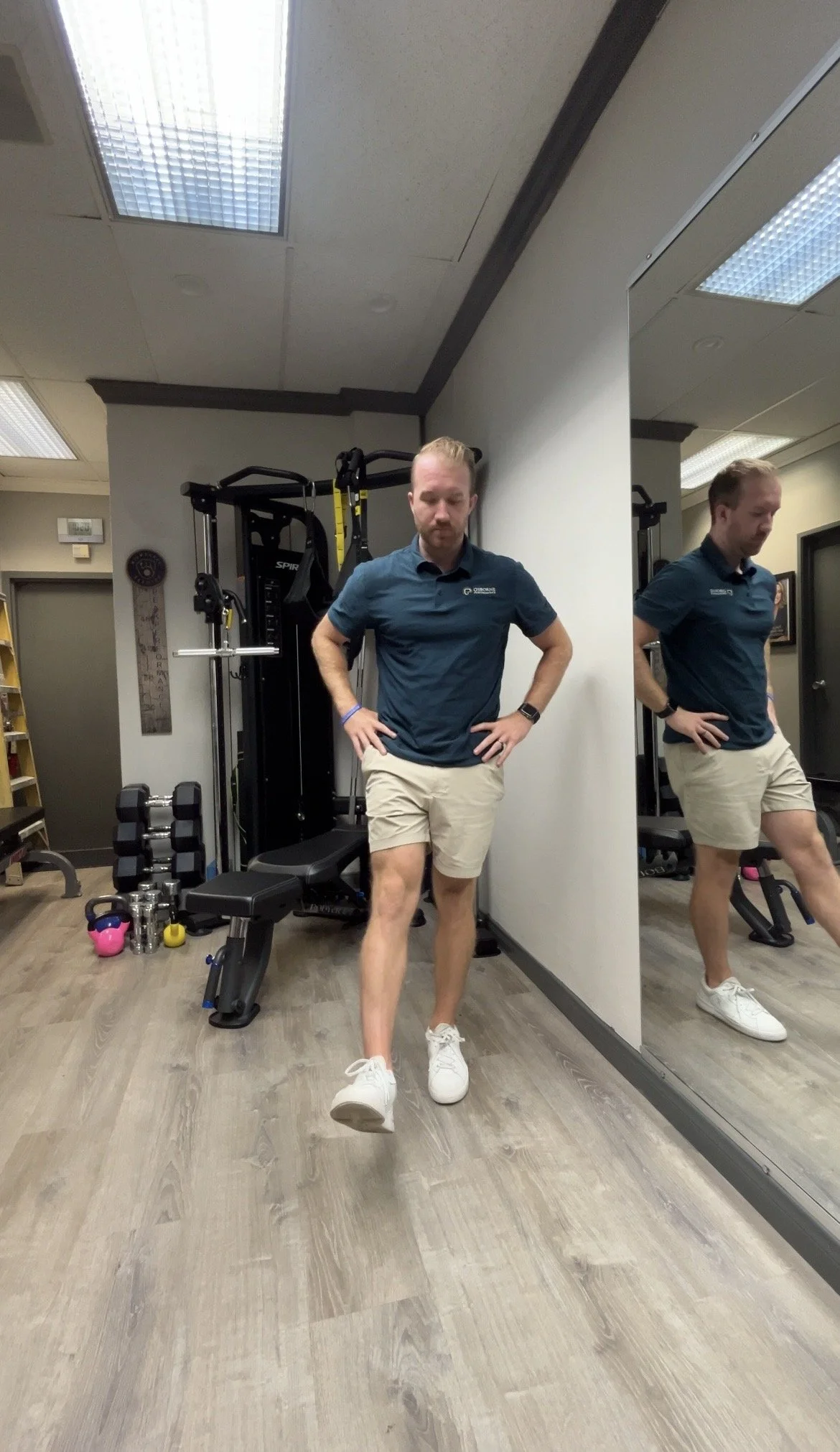
Single Leg Balance Test
The single-leg balance test assesses your ability to maintain stability while standing on one leg. Stand barefoot with your hands on your hips and lift one foot off the ground. Maintain your balance for 15 seconds without touching the opposite foot down or using excessive trunk or arm movements. Repeat on the opposite leg.
Common compensations include excessive wobbling, touching the opposite foot down, using the arms to regain balance, or leaning the trunk excessively. Difficulty maintaining balance may indicate deficits in hip strength, core stability, proprioception, or lower extremity control that can affect both golf performance and injury risk.
Conclusion
Every golfer has a unique swing, but every golfer also has unique physical limitations that can influence how they move, perform, and feel on the course. If your body doesn't have the mobility, strength, stability, or balance to support the positions your swing requires, it becomes much more difficult to play consistently—regardless of how much you practice.
The good news is that these limitations can be identified and improved. By addressing the root cause rather than simply treating the symptoms, you can move more efficiently, reduce stress on your body, and make it easier to achieve the swing positions you're working toward.
If you found one or more of these screens challenging, it may be time for a more comprehensive assessment. At Osborne Performance, I perform golf-specific movement evaluations to identify the physical limitations affecting your swing and develop an individualized plan to help you move better, play better, and stay on the course longer.
Ready to find out what's limiting your golf swing? Schedule a Golf Movement Assessment today and start improving your mobility, strength, and performance both on and off the course.